
 Back
Back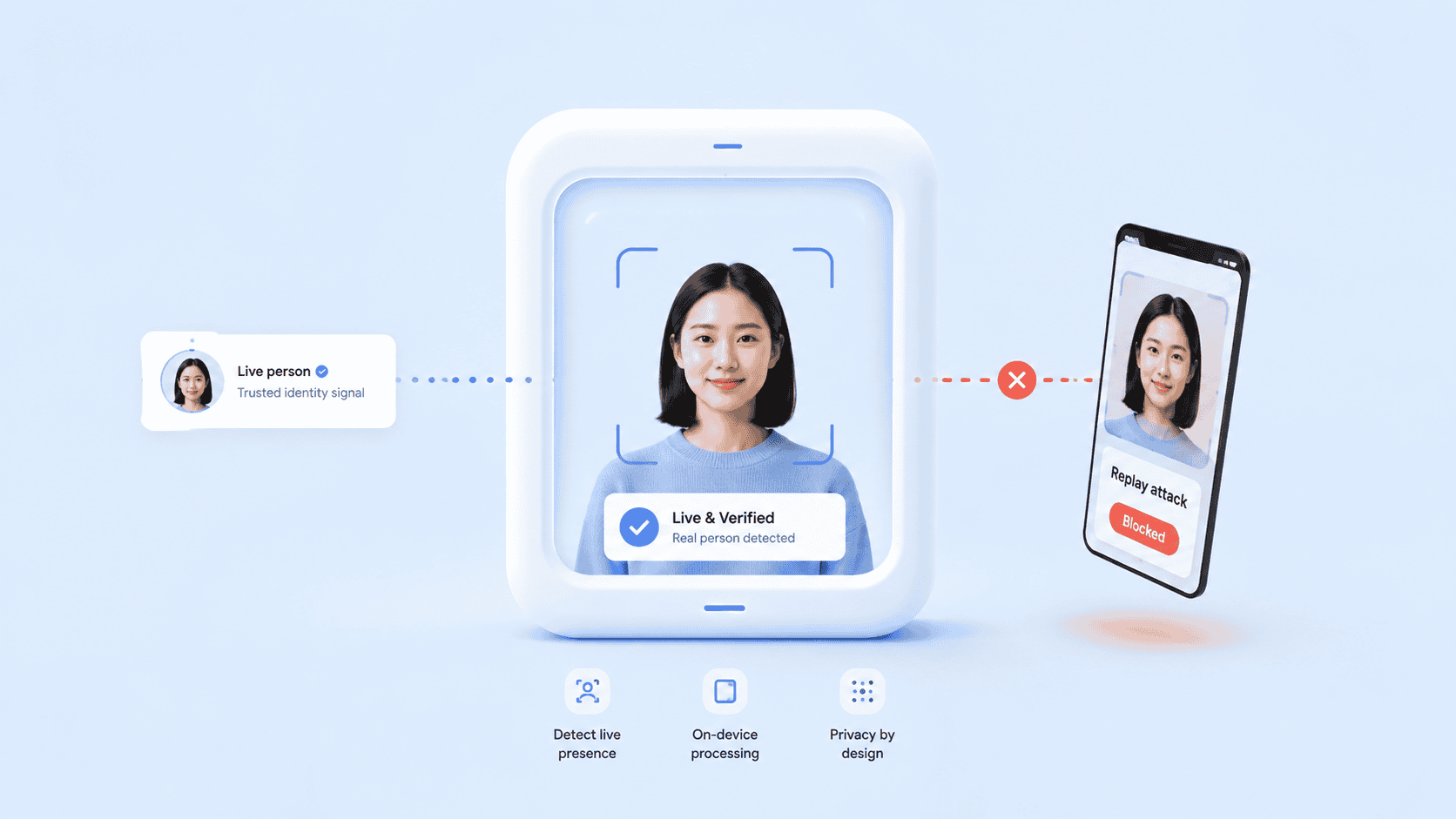
Choosing liveness detection software is no longer a matter of checking whether a product can reject a printed photograph. Buyers now have to consider screen replays, masks, deepfakes, virtual cameras, injected video, device integrity, user friction, privacy, and how the liveness result connects to face matching or identity verification.
This comparison focuses on that buying decision. Rather than treating every vendor as interchangeable, it looks at ten notable providers through the factors that matter when deploying face liveness detection in real authentication and verification workflows.
Key takeaways
- The best liveness detection product is the one that matches your attack model, deployment architecture, privacy requirements, and acceptable user friction.
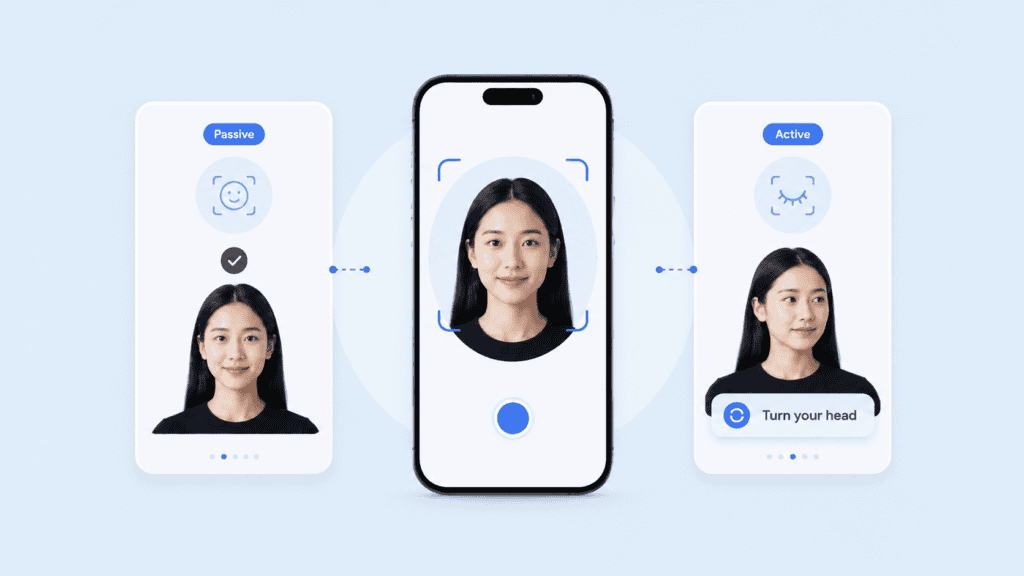
- Passive liveness can reduce onboarding friction, while active or step-up checks may be useful when a transaction requires stronger evidence of presence.
- ISO/IEC 30107-3 testing is useful evidence, but buyers should examine the scope, attack instruments, product version, and deployment configuration that were tested.
- Presentation attacks and digital injection attacks are related but different threats. Ask vendors how they address both.
- Run a controlled proof of concept with genuine users and known spoof attempts rather than choosing from marketing claims alone.
What to look for in liveness detection software
Liveness detection determines whether biometric input comes from a living person who is present during capture rather than from an artifact or manipulated input. If you need more background before comparing products, PrivateID’s guide to what liveness detection is explains how liveness differs from face matching and where it fits in biometric identity workflows.
The formal security term you will often encounter is presentation attack detection (PAD). ISO/IEC 30107-3:2023 establishes principles and methods for evaluating and reporting the performance of PAD mechanisms. The standard focuses on attacks taking place at the biometric capture device and does not represent a complete system-level security assessment.
NIST has also evaluated passive, software-based face PAD. Its FATE PAD evaluation assessed algorithms operating on conventional 2D imagery against different presentation attack instruments. The results reinforce an important procurement point: performance against one spoof type should not automatically be assumed to apply equally to every other attack.
When comparing liveness detection software, examine at least these areas:
| Buying criterion | What to investigate |
| Liveness method | Passive, active, challenge-response, or configurable combinations |
| Presentation attacks | Printed photos, display replays, video, 2D masks, 3D masks, and related artifacts |
| Injection protection | Virtual cameras, manipulated streams, deepfakes, and digitally injected media |
| Independent testing | ISO/IEC 30107-3 testing, laboratory, test level, date, and tested version |
| Deployment | Cloud, server, on-premises, browser, mobile SDK, or on-device |
| Privacy | Where images and biometric data are processed, transmitted, and retained |
| User experience | Capture time, required movements, retries, accessibility, and low-light performance |
| Integration | SDKs, APIs, web components, supported platforms, and result format |
| Face matching | Whether liveness can be combined with selfie-to-ID or enrolled-user matching |
| Operational controls | Threshold configuration, risk escalation, retry limits, and audit information |
For remote identity proofing, these questions are not merely theoretical. NIST Special Publication 800-63A requires presentation attack detection for remotely collected and compared biometric characteristics in covered identity proofing scenarios. It also calls for controls that increase confidence digital media came from a genuine sensor, such as detecting virtual cameras, device emulators, or compromised devices.
Top 10 liveness detection software vendors
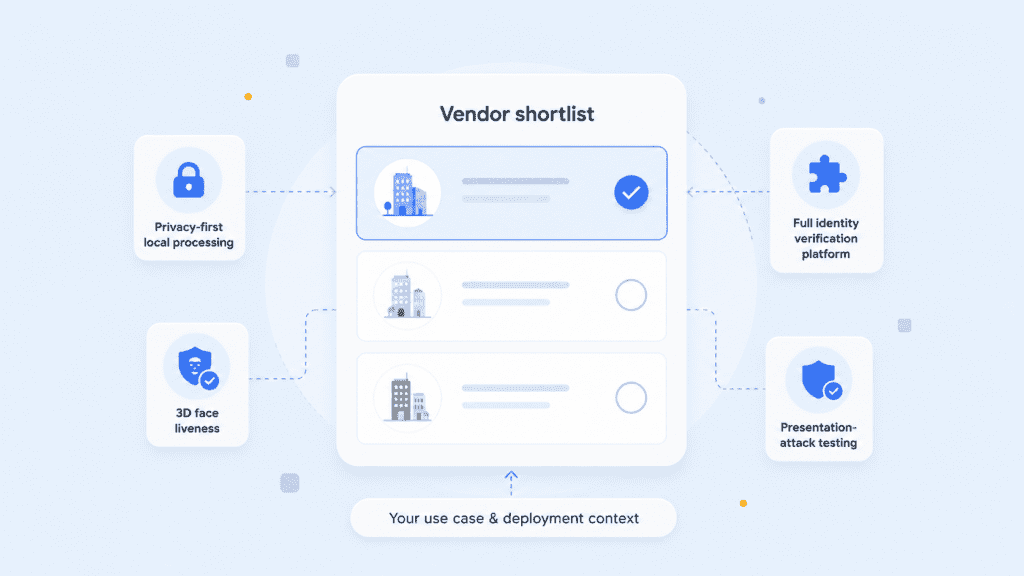
The list below is not a universal ranking from strongest to weakest. Vendors differ significantly in architecture and product scope. A bank building full document-based onboarding has different requirements from an application that only needs a lightweight liveness signal.
1. PrivateID
PrivateID is a strong candidate for organizations that place on-device processing and biometric privacy near the top of the requirements list.
Its passive liveness technology runs on the user’s device and is designed to detect presentation attempts involving paper images, digital screens, masks, and deepfakes. Images do not need to leave the device for the liveness process. PrivateID also supports active liveness for workflows that require a more explicit step-up check.
That architecture becomes particularly relevant when liveness forms part of a broader identity system. An organization can combine liveness with facial recognition, document verification, age assurance, or authentication rather than treating liveness as an isolated API.
PrivateID states that its liveness technology works with cameras above 480p. Teams assessing a privacy-sensitive deployment should compare that on-device model with server-side alternatives, particularly when sending biometric imagery to centralized infrastructure creates additional governance requirements.
Best fit: Privacy-sensitive identity verification, enrollment, age assurance, and authentication workflows requiring edge processing.
For technical details on the architecture and supported use cases, see PrivateID’s on-device liveness detection page.
2. iProov
iProov is well established in remote biometric verification and offers liveness technology intended to identify both presentation attacks and digitally manipulated inputs.
Its approach is aimed at determining whether the correct person is genuinely present during a remote verification event. That matters in high-assurance environments where the threat model extends beyond somebody simply holding a printed photograph in front of a camera.
A procurement team evaluating iProov liveness detection should ask for the independent test documentation that applies to the specific product and deployment configuration being considered. Testing performed on one configuration should not automatically be treated as evidence for every implementation.
Best fit: High-assurance remote identity verification where presentation and injection threats both require close scrutiny.
3. FaceTec
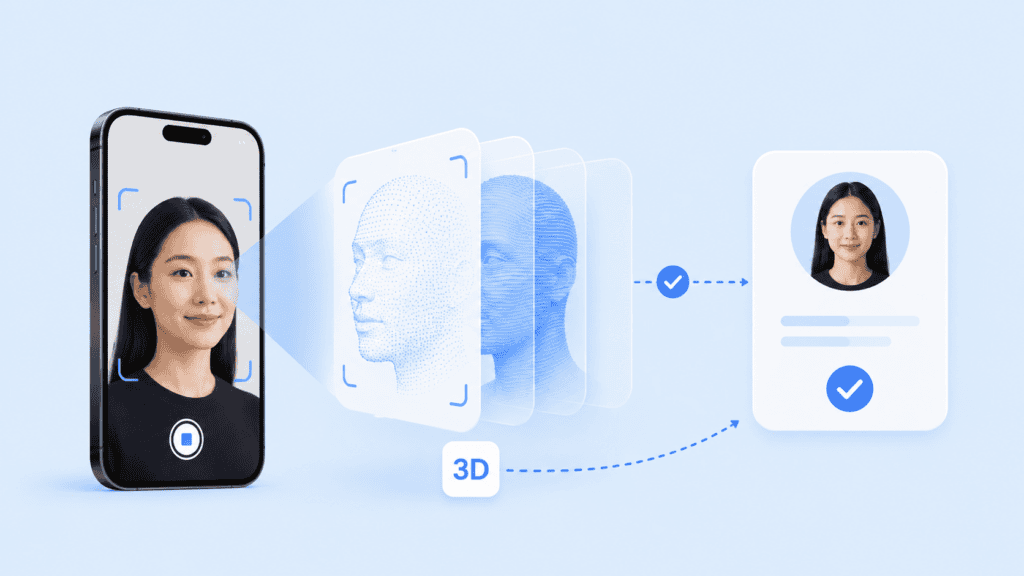
FaceTec uses a 3D-focused biometric approach. Its ZoOm technology captures facial information that can be used for liveness detection and biometric matching.
This differs from a single-image passive model. FaceTec gathers additional facial data during capture and uses it to determine whether the subject appears live before or alongside identity comparison.
The product is relevant to organizations looking for a biometric workflow that can operate across mobile devices and compatible webcam environments.
Best fit: Teams specifically seeking 3D liveness combined with face matching and repeat biometric authentication.
When comparing FaceTec liveness with passive alternatives, test the complete capture process rather than security claims alone. Extra user interaction can affect completion rates, particularly across diverse devices and user groups.
4. Jumio
Jumio liveness detection sits within a broader identity verification platform rather than functioning only as a standalone biometric component.
Its identity workflows can combine document verification, facial capture, liveness, face comparison, and additional fraud checks. This can reduce the amount of orchestration an organization needs to build internally.
That broader platform approach may be useful for regulated onboarding environments where the buyer needs multiple identity controls rather than only a liveness result.
Best fit: Enterprises seeking liveness as one component of customer identity verification, Know Your Customer (KYC), or authentication workflows.
5. Entrust Identity Verification, formerly Onfido
Organizations searching for Onfido liveness detection should be aware that Onfido was acquired by Entrust, and its identity verification technology now forms part of Entrust’s identity security portfolio.
Onfido’s Motion product introduced a short facial capture for biometric liveness rather than relying entirely on traditional gesture-heavy challenge-response. The larger product offering also connects liveness with document and identity verification processes.
Its main advantage for some buyers is therefore not simply the biometric check itself. It is the ability to place that check inside a broader onboarding and fraud-management workflow.
Best fit: Organizations evaluating an enterprise identity verification platform rather than assembling separate biometric services.
6. Yoti
Yoti provides active and passive liveness options as part of its identity products.
Passive liveness allows the system to evaluate the face without asking the user to complete an obvious movement. Active liveness can introduce a movement-based interaction when a workflow requires a more visible challenge.
This gives implementers a useful design choice. Low-friction onboarding may favor a passive check, while higher-risk actions can justify additional interaction.
Best fit: Businesses that need configurable active or passive liveness across identity and age-assurance use cases.
7. Regula
Regula provides liveness capabilities through its Face SDK alongside face detection, comparison, and identification.
Its SDK gives developers multiple ways to structure the capture flow, including passive and user-interactive approaches. That flexibility can be useful when one application contains transactions with different risk levels.
For example, a routine account check could use passive face liveness detection, while an account recovery workflow could require a more explicit interaction.
Best fit: Developers wanting configurable liveness modes inside a broader cross-platform face SDK.
8. Veriff
Veriff integrates passive liveness with broader identity verification and biometric authentication workflows.
Rather than treating the liveness result as the only fraud signal, the platform can evaluate it alongside other information gathered during identity verification. This model can be useful when attacks involve several techniques at once.
A fraudulent session, for example, may combine suspicious document evidence, unusual device behavior, and attempted biometric spoofing. Reviewing those signals together can provide more context than an isolated live-or-not-live result.
Best fit: Digital onboarding programs looking for passive liveness inside an end-to-end identity verification workflow.
9. BioID
BioID specializes in biometric anti-spoofing and presentation attack detection.
Its liveness technology uses multiple types of analysis to identify attempts involving presentation artifacts and manipulated imagery. That makes it relevant for organizations that want a dedicated PAD component rather than a large identity orchestration platform.
As with any vendor citing independent PAD testing, buyers should request documentation covering the current product version, relevant attack instruments, and the configuration they plan to deploy.
Best fit: Teams primarily interested in dedicated face anti-spoofing and PAD capabilities.
10. Innovatrics
Innovatrics provides multiple liveness methods through its Digital Onboarding Toolkit.
Its options include passive approaches as well as workflows that introduce additional user interaction. The platform also supports different deployment models, making it relevant for teams that want more control over where biometric processing occurs.
This configurability can be useful for enterprises and integrators supporting several applications with different risk and infrastructure requirements.
Best fit: Organizations and integrators needing flexible deployment, detailed SDK control, and multiple liveness modes.
How to test vendors before buying
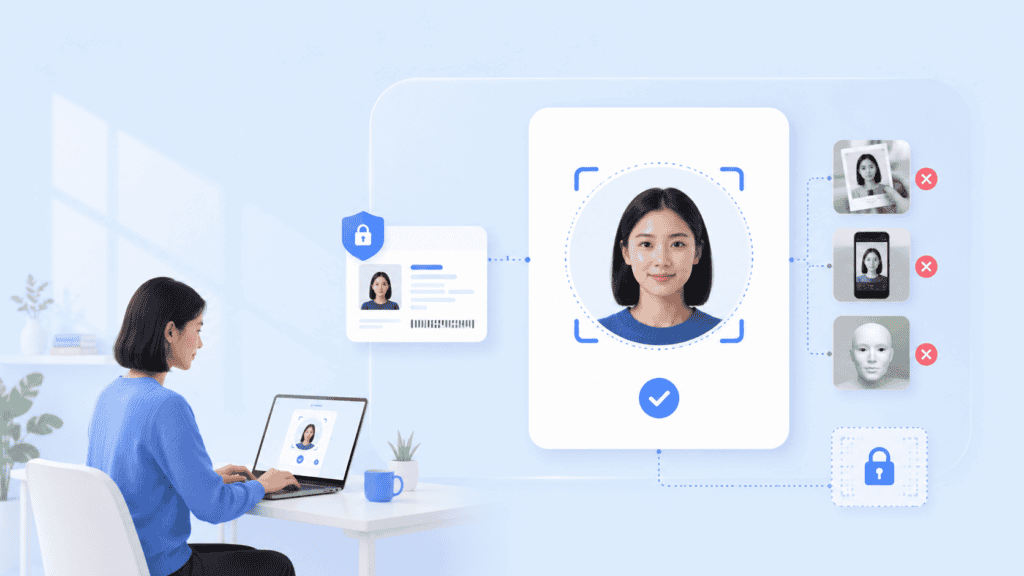
A vendor comparison table can help create a shortlist. It cannot tell you how the software will behave in your environment.
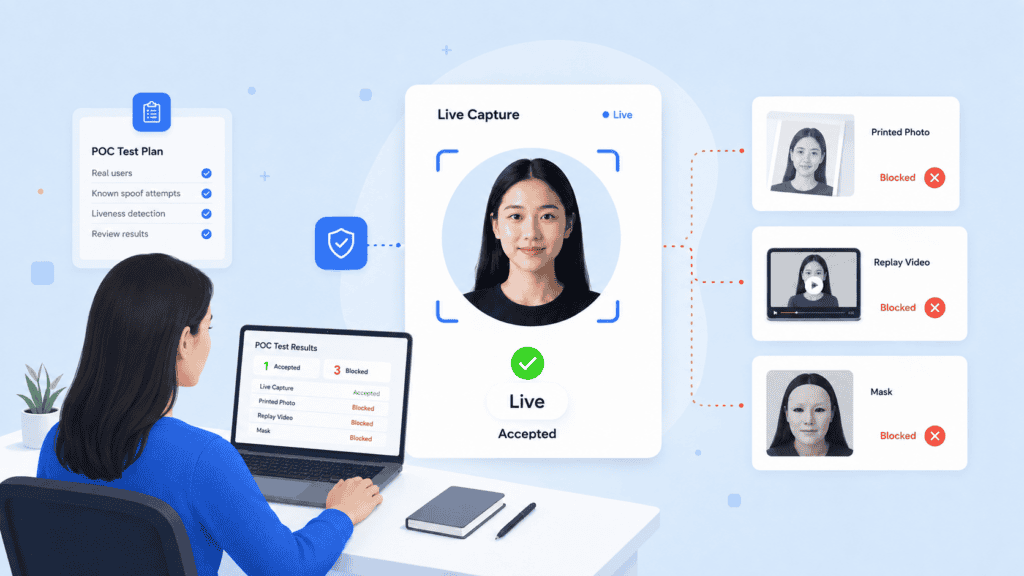
A practical proof of concept should use the same devices, users, lighting conditions, capture flow, and attack set for every vendor. Otherwise, the comparison becomes difficult to interpret.
Start by defining your threat model. Consider a financial application that permits remote account recovery. The security team may want to test at least four scenarios:
- An attacker presents a printed photograph to the camera.
- An attacker replays a victim’s video on another screen.
- An attacker presents a realistic mask.
- An attacker injects synthetic or manipulated video into the capture process.
The fourth scenario deserves separate treatment. ISO/IEC 30107-3 concerns attacks taking place at the biometric capture device during presentation, while attacks outside that point are outside the standard’s defined scope.
NIST likewise distinguishes presentation attack controls from the broader problem of forged or injected digital media. Its current identity proofing guidance specifically calls for controls that increase confidence that remote media came from a genuine sensor.
That means a procurement team should not interpret “PAD tested” as proof that every virtual-camera, deepfake, or injection attack is covered.
Next, run genuine users through the same flow. Include older phones, webcams, glasses, varied lighting, different skin tones, facial hair, and realistic network conditions. Track:
- successful first attempts;
- retries;
- average completion time;
- false rejections;
- capture failures;
- user abandonment;
- spoof attempts accepted;
- spoof attempts rejected; and
- cases requiring manual review.
Passive systems deserve particular attention because user experience is one of their main advantages. PrivateID’s guide to passive liveness detection explains how passive checks differ from visible blink, turn, or movement challenges.
Finally, verify architecture rather than treating terms such as “on-device,” “SDK,” or “private” as interchangeable. Ask where the image is captured, where liveness inference occurs, what data leaves the device, what is retained, and whether fallback workflows or diagnostic logs change that data path.
Choosing the right vendor for your use case
There is no single best liveness detection vendor for every deployment.
For a privacy-first application, on-device processing may outweigh having an extensive cloud identity platform. For regulated onboarding, independent PAD testing and document verification may carry more weight. A marketplace fighting mass account creation may place more emphasis on passive completion rates, bot resistance, and device integrity.
A useful shortlist can be framed this way:
| Requirement | Vendors worth evaluating |
| On-device, privacy-focused liveness | PrivateID, Innovatrics |
| 3D facial liveness | FaceTec |
| High-assurance remote presence checks | iProov |
| Full identity verification platform | Jumio, Entrust, Veriff |
| Active and passive mode flexibility | Yoti, Regula, Innovatrics |
| Dedicated PAD emphasis | BioID |
| Privacy-preserving face authentication | PrivateID |
Treat that table as a starting point, not a verdict. Product configurations change, and two customers using the same vendor can implement materially different architectures.
A better vendor question than “Do you support biometric liveness detection?” is:
Which attacks does this exact product configuration address, where does detection occur, what independent evidence supports it, and what happens when the system is uncertain?
Those questions expose much more than a generic claim about anti-spoofing.
Choosing liveness detection software
The right liveness detection software should fit the threats you actually need to address without introducing unnecessary friction or biometric data exposure.
Compare architecture, presentation attack coverage, injection defenses, independent testing, genuine-user performance, and integration requirements. Then verify those claims in a controlled proof of concept using consistent devices, users, and test cases.
A vendor name alone cannot tell you whether a deployment will be secure. The implementation matters just as much as the underlying detection technology.
FAQs
What is liveness detection software?
Liveness detection software checks whether biometric input appears to come from a live, physically present person rather than from a spoof such as a printed image, replayed video, mask, or other artificial representation. It is commonly paired with facial recognition or identity verification.
What is the best liveness detection software?
There is no universal best product. PrivateID may suit privacy-focused on-device deployments, while vendors such as Jumio, Entrust, and Veriff may fit organizations looking for broader identity verification platforms. The right choice depends on your attack model, deployment requirements, independent testing needs, and acceptable user friction.
What is the difference between active and passive liveness detection?
Active liveness asks the user to perform an action, such as turning their head, moving closer to the camera, or blinking. Passive liveness performs the check without a visible challenge, reducing interaction during the capture process.
Does liveness detection stop deepfakes?
Some products include controls intended to identify manipulated facial media, but “deepfake protection” is not one uniform capability. Buyers should ask whether a vendor addresses presentation of manipulated media to the camera, direct digital injection, virtual cameras, or a combination of these attacks.
What is ISO/IEC 30107-3?
ISO/IEC 30107-3 defines principles and methods for testing and reporting biometric presentation attack detection performance. It is useful when evaluating anti-spoofing technology, but it does not constitute a complete security assessment of the entire identity system.
Is face liveness detection the same as facial recognition?
No. Face liveness detection asks whether the biometric sample appears to come from a live person who is present. Facial recognition asks whether the captured face matches a reference identity or previously enrolled biometric.
Can passive liveness detection work from one selfie?
Some passive systems can evaluate a single facial capture, while others analyse multiple frames or video. The number of frames alone does not establish security, so compare independent testing, attack coverage, capture integrity, and genuine-user error rates.